

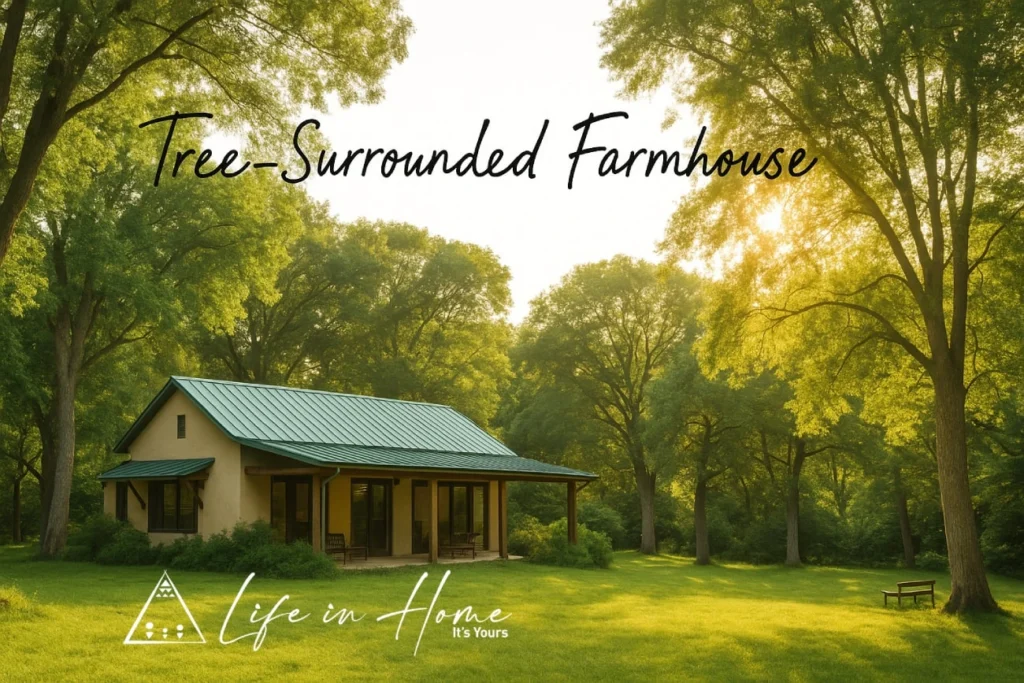
Experience 4°C cooler temperatures naturally with a tree-surrounded home.
A Coconut Grove Farmhouse is not just a home built on empty land; it is a sanctuary nestled inside a living ecosystem. In the Coimbatore region, buying a Coconut Grove Farmhouse means securing natural shade, privacy, and a recurring agricultural income from Day 1.
At Life in Home, we specialize in finding mature orchard lands and building eco-friendly villas without cutting a single tree.
Why Buy a Coconut Grove Farmhouse?
Beyond the beauty, owning a home inside a mature plantation makes financial and lifestyle sense.
1. Natural Cooling (Micro-Climate)
A concrete house in the city absorbs heat. A Coconut Grove Farmhouse under a canopy of trees remains 3–5 degrees cooler than the outside temperature. You rarely need air conditioning, even in April or May.
2. Instant Privacy
You don’t need to build high compound walls. A dense ring of trees acts as a natural sound barrier and visual shield, giving you complete privacy from neighbors and roads.
3. Tax-Free Agricultural Income
Unlike a barren plot, a tree-surrounded farm is an asset.
Coconut Yield: A single acre with 60–70 trees can generate ₹60,000 to ₹1 Lakh per year in passive income.
Timber Value: Teak or Mahogany trees planted along the boundary act as a “Green Fixed Deposit.”
Types of “Tree-Surrounded” Projects
We categorize our nature projects based on the plantation type:
- The Coconut Grove Villa: Popular in Pollachi and Madampatti. Tall palms provide high shade while allowing breeze to flow freely at the ground level.
- The Fruit Orchard Retreat: Farmhouses nestled among Mango, Jackfruit, or Amla trees. These are ideal for families who want a “Food Forest” experience.
- The Forest Edge Home: Located in Anaikatti, these homes are surrounded by native wild trees and offer a true jungle experience.
Construction Challenge: Building Without Cutting
Most builders clear the land. We don’t. To protect your Coconut Grove Farmhouse, we use specific engineering protocols:1. The “Root-Bridge” Foundation
We use Isolated Footings (Pillars) connected by plinth beams raised above the ground. This allows roots to pass freely under your house, keeping the tree stable and your floor crack-free.2. Coconut-Proof Roofing
In a grove, a falling coconut is a projectile. We use Reinforced Concrete Slopes or high-gauge metal roofing with sound-dampening layers so you are safe and don’t hear the impact.The Health Science of Living in a Grove
Living in a Coconut Grove Farmhouse is a medical choice, not just a poetic one.
- Oxygen Richness: A mature grove produces higher oxygen levels than a city park, aiding deep sleep.
- Cortisol Reduction: Studies show that looking at complex leaf patterns reduces stress hormones by 13%.
- Dust Filtration: Trees act as a bio-filter, trapping 70% of dust before it reaches your verandah.
The Economics of a “Productive” Farmhouse
Most luxury homes are liabilities—they cost money to maintain. A Tree-Surrounded Farmhouse is an Asset. Here is how you can turn your holiday home into a revenue generator through “Multi-Layer Farming.”1. The Coconut Model (Low Effort)
This is the standard for Coimbatore and Pollachi. Yield: A managed acre yields approx. 8,000–10,000 nuts annually. Management: You don’t need to do the work. Local merchants will lease the harvest rights, paying you a lump sum annually while they handle the plucking and transport. Result: Your property pays for its own security and electricity bills.2. The Intercropping Model (High Yield)
Don’t waste the space between trees. Nutmeg & Cocoa: These shade-loving crops thrive under the canopy of coconut trees. In areas like Pollachi, Nutmeg (Jathikai) is “Green Gold,” fetching high market prices. Pepper Vines: Black pepper vines can be trained to climb existing Areca or Silver Oak trees, adding a vertical layer of income without using extra land.3. The Timber “Fixed Deposit”
For long-term investors, we plant high-value timber like Teak, Mahogany, or Red Sanders along the boundary walls. These trees require zero care after year 3 and mature into a tax-free retirement fund worth crores after 15–20 years.Technical Mastery: Building Near Roots
The biggest fear buyers have is: “Will the tree roots crack my foundation?” or “Will falling coconuts damage my roof?”
At Life in Home, we solve these engineering challenges with specific protocols:
1. The “Root-Bridge” Foundation
Coconut and Areca roots are fibrous and spread horizontally. Standard strip foundations cut these roots, killing the tree.
Our Solution: We use Isolated Footings (Pillars) connected by plinth beams raised above the ground level. This allows roots to pass freely under your house, keeping the tree stable and your floor crack-free.
2. Coconut-Proof Roofing
In a grove, a falling coconut is a projectile. Normal clay tiles will shatter.
Our Solution: We use Reinforced Concrete Slopes covered with decorative tiles. Alternatively, for lighter structures, we install “Catch Nets” or high-gauge metal roofing with sound-dampening layers so you don’t hear the impact.
3. Pest-Resistant Architecture
Living with trees means living with ants and termites.
Our Solution: We treat the soil with eco-friendly anti-termite piping systems before the foundation is laid. We also elevate the living quarters (Stilt Design), which prevents dampness and keeps crawling insects out of the living room.
The “Courtyard” Concept (Thinnai & Mutram)
A tree-surrounded home should not be a sealed glass box. We revive the traditional Chettinad concepts of:
- The Thinnai (Verandah): A wide, covered sit-out that acts as a transition zone. It is where you drink your morning coffee while watching peacocks in the grove.
- The Mutram (Central Courtyard): In larger plots, we build the house around a central tree (like a Mango or Champak tree). The open-to-sky courtyard brings rain, light, and fresh air into the center of the home, naturally venting out hot air.
Comparison: Barren Land vs. Tree-Covered Land
| Feature | Barren Land Plot | Tree-Surrounded Plot |
| Temperature | High (Direct Sun) | Cool (Natural Shade) |
| Privacy | Low (Open to view) | High (Natural Screen) |
| Income Potential | Zero | High (Coconuts/Fruit) |
| Air Quality | Average | Oxygen Rich |
| Maintenance | Low | Moderate (Garden upkeep) |
Best Locations for a Coconut Grove Farmhouse
- Pollachi Road: The undisputed king of coconut belt properties.
- Thondamuthur: Rich red soil suitable for dense plantations.
- Mettupalayam: Ideal for Areca and fruit orchards near the river belt.
Own Your Private Forest
Ready to trade traffic noise for bird songs?
Find a Coconut Grove Plot in Coimbatore

Life In Home
Farmhouse Consultant & Builders
Let me help you make your dream come true.
Leave a Reply
You must be logged in to post a comment.