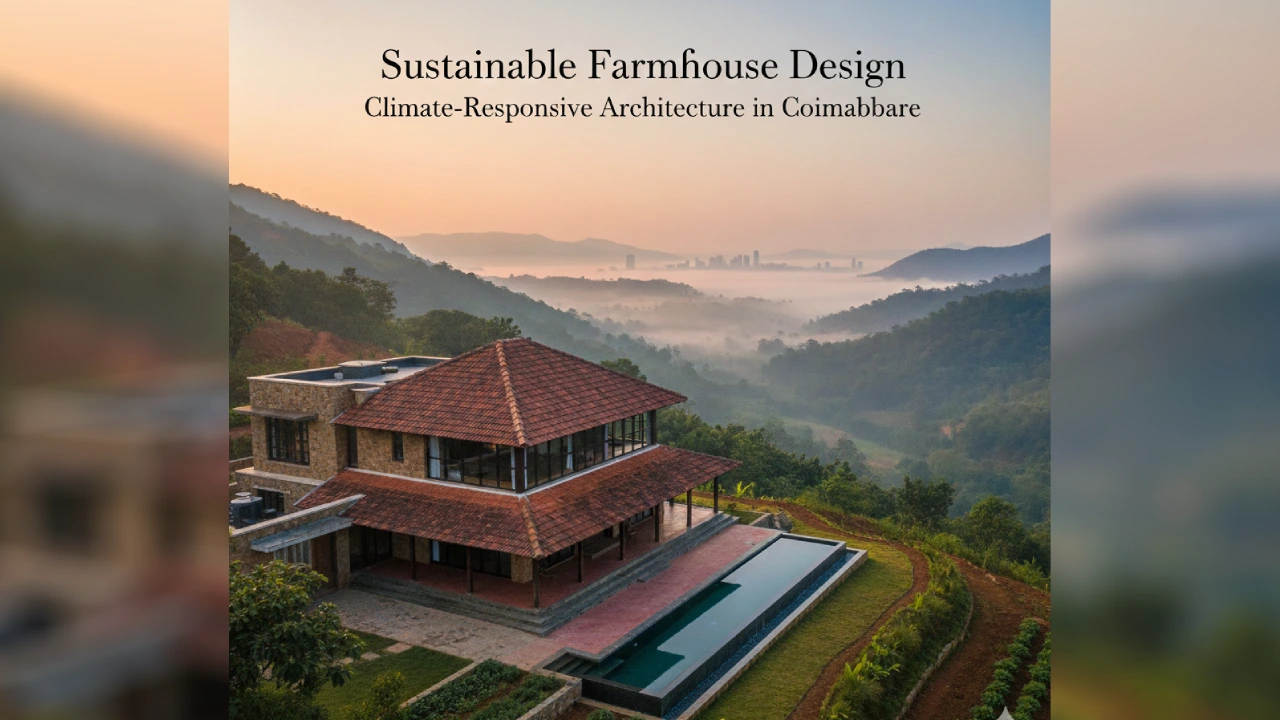
Designing a retreat in the Western Ghats foothills is about more than aesthetics; it is about harmony. Sustainable farmhouse design is the art of building a home that breathes with its surroundings, stays naturally cool in the summer, and remains resilient during Coimbatore’s heavy monsoon rains.
At Life in Home, we specialize in farmhouse design and construction that respects the local microclimate. Unlike generic city villas, a climate-smart farmhouse reduces long-term maintenance costs while significantly enhancing the living experience.
1. Orientation: Capturing the Spirit of the Western Ghats
The first step in sustainable farmhouse design is understanding the land’s orientation. In belts like Madampatti and Thondamuthur, the sun and wind patterns are unique. For searchers looking for eco-friendly builders in Coimbatore, orientation is the foundation of energy efficiency.
- Wind Alignment: We align openings to catch the natural breeze from the mountains, ensuring your home stays breezy even without air conditioning.
- Sun Path Analysis: By positioning living spaces to avoid the harsh afternoon sun, we prevent “heat traps,” keeping your interiors naturally 5-8 degrees cooler.
2. Deep Overhangs and The Traditional Thinnai
Our designs often incorporate the wisdom of traditional South Indian architecture. Deep roof overhangs are a staple of climate-responsive architecture in Tamil Nadu. They protect walls from direct sunlight and heavy rain, preventing moisture buildup and heat absorption.
The “Thinnai” or traditional wrap-around verandah serves as a thermal buffer, cooling the air before it enters your home. This blend of heritage and modern design is what sets our farmhouse construction services apart.
3. Material Intelligence: Building for Longevity
A true climate-smart home uses materials that are thermally efficient. For sustainable farmhouse design, we prioritize materials that balance temperature:
- Exposed Brick & Natural Stone: These provide high thermal mass, staying cool during the day and releasing heat slowly at night.
- Athangudi & Red Oxide Flooring: These traditional flooring options are naturally cool underfoot, perfect for the Coimbatore climate.
- Clay Tile Roofing: Unlike concrete slabs, clay tiles allow the roof to breathe, significantly reducing indoor heat levels.
4. Managing the Elements: Moisture and Wildlife
Building near the foothills means dealing with high humidity and proximity to wildlife. Climate-responsive architecture must account for these factors. We use moisture-controlled foundations and termite-resistant materials to ensure your sanctuary remains durable for generations.
Additionally, our site development includes strategic “green buffers”—landscaping that acts as a natural shield against dust and noise, further enhancing the privacy of your farmhouse site.
5. The Investment Value of Eco-Friendly Building
While sustainable farmhouse design requires thoughtful planning, it pays for itself through reduced energy bills and higher resale value. In 2025, “Green Homes” are in high demand as buyers seek properties that offer a healthier, low-carbon lifestyle.
Conclusion: A Home That Feels Alive
At Life in Home, we believe a farmhouse should be more than a building; it should be a lifestyle rooted in peace and natural comfort. By embracing sustainable farmhouse design, we create retreats that are not just felt but lived in deeply.
Ready to design your climate-smart retreat? Explore our farmhouse construction blog for more inspiration or contact our expert team today.







Leave a Reply
You must be logged in to post a comment.